City of Tshwane
Quick Fact
Tshwane is home to over 130 embassies, representing the second largest concentration after Washington D.C.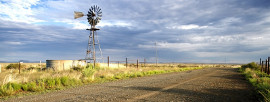
The City of Tshwane is the capital of South Africa and is the largest municipality, as measured by land mass. Tshwane is amongst the six largestmetropolitan municipalities in South Africa and the second largest in Gauteng, as measured by Gross Domestic Product (GDP). The Tshwane regioncovers 6 368km² of Gauteng’s 19 055km² and houses approximately 2,9million residents.Tshwane consists of seven regions with 105 wards and 210 councillors.
The City has a vibrant and diverse economy, which enables it to contribute at least 26,8% of the Gauteng Province’s GDP and 9,4% of the GDP of the national economy. Tshwane is the administrative capital of South Africa and is home to the Union Buildings with government-related business playing an important role in the local economy. As a result, the city is taking active measures to firmly position itself as Africa's leading capital city of excellence. The municipality's main economic sectors are community services and government, followed by finance and manufacturing. Metal products, machinery and household products are the largest sub-sectors within manufacturing. The City has a well-established manufacturing sector, with the automotive industry representing the most significant component.
| Rank view all | ||
|---|---|---|
| City of Cape Town | 3,740,026 | 2 |
| Ethekwini | 3,442,361 | 3 |
| Ekurhuleni | 3,178,470 | 4 |
| City of Tshwane | 2,921,488 | 5 |
| Nelson Mandela Bay | 1,152,115 | 6 |
| Buffalo City | 755,200 | 7 |
| Mangaung | 747,431 | 8 |
Quick Fact
The Tshwane population grew by 3,1% in 2011 and makes up 24,2% of Gauteng’s total population.
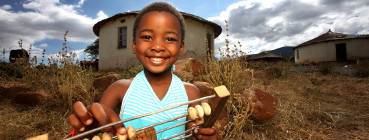
According to the 2011 Census data, the City of Tshwane is home to approximately 2,9 million people. Tshwane’s population is predominantly black Africans representing 2,2 million people, followed by a White population of approximately 600000 people, 59 166 Coloured individuals and 51 547 Asian individuals. About 37% of the population is classified as youth, making Tshwane one of the youngest cities in South Africa.
The overall number of men and women in Tshwane are equivalent; however, men have more job opportunities than women. Tshwane is home to different languages such asAfrikaans, English, Northern Sotho, Tsonga and Tswana. From an education perspective, as per the 2011 Census estimates, 25 per cent of Tshwane’s population are matriculants; whilst 3,7 per cent of the population has no education.
| Group | Percentage |
|---|---|
| Black African | 75,4% |
| Coloured | 2% |
| Indian/Asian | 1,8% |
| White | 20,1% |
| Other | 0,7% |
| Age | Males | Females |
|---|---|---|
| 0-4 | 4,7% | 4,7% |
| 5-9 | 3,6% | 3,6% |
| 10-14 | 3,3% | 3,2% |
| 15-19 | 3,8% | 4% |
| 20-24 | 5,9% | 5,8% |
| 25-29 | 6% | 5,6% |
| 30-34 | 5% | 4,5% |
| 35-39 | 4,2% | 3,9% |
| 40-44 | 3,4% | 3,4% |
| 45-49 | 2,7% | 2,7% |
| 50-54 | 2,2% | 2,4% |
| 55-59 | 1,8% | 1,9% |
| 60-64 | 1,2% | 1,4% |
| 65-69 | 0,8% | 1% |
| 70-74 | 0,5% | 0,7% |
| 75-79 | 0,3% | 0,5% |
| 80-84 | 0,2% | 0,4% |
| 85+ | 0,1% | 0,3% |
| Language | Percentage |
|---|---|
| Afrikaans | 18,4% |
| English | 8,4% |
| IsiNdebele | 5,6% |
| IsiXhosa | 2,1% |
| IsiZulu | 8,3% |
| Sepedi | 19,4% |
| Sesotho | 5,1% |
| Setswana | 14,7% |
| Sign Language | 0,3% |
| SiSwati | 1,5% |
| Tshivenda | 2,3% |
| Xitsonga | 8,4% |
| Other | 3% |
| Not Applicable | 2,4% |
| Group | Percentage |
|---|---|
| Married | 28,3% |
| Living together like married partners | 7,7% |
| Never married | 58,5% |
| Widower/Widow | 2,9% |
| Separated | 0,6% |
| Divorced | 2% |
| Group | Percentage |
|---|---|
| No Schooling | 3,1% |
| Some Primary | 33,3% |
| Completed Primary | 4,9% |
| Some Secondary | 29,2% |
| Completed Secondary | 20,2% |
| Higher Education | 6,1% |
| Not Applicable | 3,2% |
| Sex | Percentage |
|---|---|
| Female | 50,2% |
| Male | 49,8% |
Quick Fact
99% of households within Tshwane have access to sanitation facilities and 72% have electricity connections.
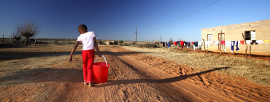
The City boasts a growing and diverse population living in an environment that is increasingly developing to meet the basic needs of its people. With approximately24,3 per cent of the population having been classified as living in poverty, down from 25,8 per cent in 2010 and only 1,1 per cent of the population living on less than US$2 per day, the City is making tremendous strides in bridging the poverty gap. In addition, the number of people living in poverty has dropped from just over 10000 in 2003 to below 4000 in 2011. The City has experienced an urbanisation rate of 1,6 per cent over the past 3 years with 89,3 per cent of the population living in urban areas. Furthermore, more than 75 per cent of the population resides in formal housing, with 77,9 per cent of households having access to hygienic sanitation and over 87 per centhaving access to piped water at or above the RDP level. With 72,2% of the households having electricity connections and 84,6% benefitting from formal refuse removal, it is increasingly evident that the living conditions in the City are well on their way to being the best in the country.
With almost 49 per cent of households having access to piped water inside their dwelling and 72 per cent having access to electricity, the City continues to make advances in affording all households access to basic services. Almost all households in the City (99 per cent) have access to sanitation facilities with 76 per cent having access to flush toilets. Unemployment, whilst below the provincial and national averages, continues to be a major issue for the City and this is further highlighted by the City’s annual household income profile. According to Census 2011 data, nearly 15 per cent of households have no source of income and approximately 46 per cent of households in the City earn an annual income of less than R76 401. The average annual household income in the City is around R60 642 with only 0,65% of households in the City earning more than R457 600 per annum. Individual monthly incomes vary greatly amongst population groups and over 44 per cent of individuals in the City have no source of income whilst another 9,6 per cent of the population earns less than R401 per month and almost 21 per cent of the population earns between R401 and R1 600 per month.| Area | Percentage |
|---|---|
| Urban | 92,3% |
| Tribal/Traditional | 5,5% |
| Farm | 2,2% |
| Item | Yes | No |
|---|---|---|
| Cellphone | 95% | 5% |
| Computer | 37,6% | 62,4% |
| Television | 81,8% | 18,2% |
| Satellite Television | 37,5% | 62,5% |
| Radio | 70,6% | 29,4% |
| Landline / Telephone | 18,9% | 81,1% |
| Motor Car | 44,1% | 55,9% |
| Refrigerator | 76,8% | 23,2% |
| Electric / Gas-Stove | 82,5% | 17,5% |
| Energy Source | Cooking | Heating | Lighting |
|---|---|---|---|
| Electricity | 84,2% | 73,5% | 88,6% |
| Gas | 3% | 3,7% | 0,2% |
| Paraffin | 10,8% | 4,7% | 1,5% |
| Solar | 0,2% | 0,4% | 0,2% |
| Candles | 0% | 0% | 9,3% |
| Wood | 1,1% | 4,3% | 0% |
| Coal | 0,2% | 0,8% | 0% |
| Animal Dung | 0% | 0,1% | 0% |
| Other | 0,4% | 0% | 0% |
| None | 0,2% | 12,6% | 0,3% |
| Access | Percentage |
|---|---|
| From Home | 14,9% |
| From Cellphone | 18,5% |
| From Work | 9,4% |
| From Elsewhere | 8,6% |
| No Access | 48,6% |
| Tenure Status | Percentage |
|---|---|
| Rented | 32% |
| Owned and fully paid off | 33,7% |
| Owned but not yet paid off | 18,3% |
| Occupied rent free | 13,4% |
| Other | 2,7% |
| Source of water | Percentage |
|---|---|
| Regional/Local water scheme (operated by municipality or other water services provider) | 90,6% |
| Borehole | 2,8% |
| Spring | 0,1% |
| Rain water tank | 0,2% |
| Dam/Pool/Stagnant water | 0,3% |
| River/Stream | 0,1% |
| Water vendor | 0,6% |
| Water tanker | 3,4% |
| Other | 1,9% |
| Toilet Facility | Percentage |
|---|---|
| None | 1,3% |
| Flush toilet (connected to sewerage system) | 76,6% |
| Flush toilet (with septic tank) | 2,1% |
| Chemical toilet | 0,7% |
| Pit toilet with ventilation | 2,3% |
| Pit toilet without ventilation | 15,1% |
| Bucket toilet | 1% |
| Other | 0,8% |
| Refuse Disposal | Percentage |
|---|---|
| Removed by local authority/private company at least once a week | 80,7% |
| Removed by local authority/private company less often | 1,3% |
| Communal refuse dump | 2,2% |
| Own refuse dump | 11,9% |
| No rubbish disposal | 3,3% |
| Other | 0,6% |
| Refuse Disposal | Percentage |
|---|---|
| Removed by local authority/private company at least once a week | 80,7% |
| Removed by local authority/private company less often | 1,3% |
| Communal refuse dump | 2,2% |
| Own refuse dump | 11,9% |
| No rubbish disposal | 3,3% |
| Other | 0,6% |
Quick Fact
City contributed 27% to the Gauteng province’s GDP in 2011 and, for the past decade, its average annual GDP growth has been higher than both the Province’s and the Nation’s average GDP.
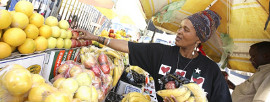
The City boasts a vibrant, diverse and growing economy which contributed 27 per cent to Gauteng’s GDP and 9 per cent to the national GDP in 2011. Its economy is highly service-based with community services and government, financial services and manufacturing as the most significant sectors. The City’s GDP (GVA) was recorded at R272 billion (in current prices) in 2011, growing by 21per cent since the 2009 slump. Furthermore, the City of Tshwane has been the fastest growing municipality in South Africa, on average, between 1997 and 2011. Gross Domestic Product per capita was R93 158 (in current prices) in 2011 increasing by 13 per cent from its 2009 figure. The City’s economy has, of course, over the past decade, enjoyed above average growth rates as compared to national and Gauteng province average.
The City has a well-established manufacturing sector with the automotive industry being a key player in this sector. The City boasts the highest concentration of automotive Original Equipment Manufacturers (OEMs) in the country. Furthermore, the City’s economy is characterised by a favourable and rapidly growing trade performance with exports in 2011 comprising 61,7 per cent as a percentage of GDP. The City has contributed 22,2 per cent to the nation’s total exports and 15,9 per cent to its total trade in 2011.
| Employment Status | Number |
|---|---|
| Employed | 1079273 |
| Unemployed | 345356 |
| Discouraged Work Seeker | 64095 |
| Not Economically Active | 612750 |
| Income | Percentage |
|---|---|
| None income | 14,9% |
| R1 - R4,800 | 2,9% |
| R4,801 - R9,600 | 4,2% |
| R9,601 - R19,600 | 10,6% |
| R19,601 - R38,200 | 15,5% |
| R38,201 - R76,4000 | 13,3% |
| R76,401 - R153,800 | 11,8% |
| R153,801 - R307,600 | 11,3% |
| R307,601 - R614,400 | 9,3% |
| R614,001 - R1,228,800 | 4,5% |
| R1,228,801 - R2,457,600 | 1,2% |
| R2,457,601+ | 0,6% |
| Agricultural households | |
|---|---|
| Type of specific activity | Number |
| Livestock production | 18,301 |
| Poultry production | 25,275 |
| Vegetable production | 38,785 |
| Production of other crops | 34,295 |
| Other | 32,378 |
**An agricultural household may engage in more than one agricultural activity
| Agricultural households | |
|---|---|
| Type of activity | Number |
| Crops only | 43,194 |
| Animals only | 15,288 |
| Mixed farming | 16,570 |
| Other | 9,464 |
**An agricultural household may not fall under more than one agricultural activity
| Income category of agricultural households | |
|---|---|
| Annual income category of agricultural household heads | Number |
| No income | 20,669 |
| R1-R4 800 | 2,604 |
| R4 801-R38 400 | 31,641 |
| R38 401-R307 200 | 20,694 |
| R307 201+ | 6,266 |
| Unspecified | 2,643 |
| Agricultural households municipal data per province |
|---|
| Western Cape (download) |
| Eastern Cape (download) |
| Northern Cape (download) |
| Free State (download) |
| KwaZulu-Natal (download) |
| North West (download) |
| Gauteng (download) |
| Mpumalanga (download) |
| Limpopo (download) |
**Please note that each province contains twenty five tables
Place names
Key Statistics 2011
| Total population | 2,921,488 |
| Young (0-14) | 23,2% |
| Working Age (15-64) | 71,9% |
| Elderly (65+) | 4,9% |
| Dependency ratio | 39 |
| Sex ratio | 99 |
| Growth rate | 3,1% (2001-2011) |
| Population density | 464 persons/km2 |
| Unemployment rate | 24,2% |
| Youth unemployment rate | 32,6% |
| No schooling aged 20+ | 4,2% |
| Higher education aged 20+ | 23,4% |
| Matric aged 20+ | 34% |
| Number of households | 911,536 |
| Number of Agricultural households | 84,516 |
| Average household size | 3 |
| Female headed households | 35,8% |
| Formal dwellings | 80,7% |
| Housing owned/paying off | 52% |
| Flush toilet connected to sewerage | 76,6% |
| Weekly refuse removal | 80,7% |
| Piped water inside dwelling | 64,2% |
| Electricity for lighting | 88,6% |
Key Statistics 2001
| Total population | 2,142,322 |
| Young (0-14) | 24,6% |
| Working Age (15-64) | 71,9% |
| Elderly (65+) | 4,4% |
| Dependency ratio | 40,9% |
| Sex ratio | 98,2 |
| Growth rate | 3,57% (2001-2011) |
| Unemployment rate | 31,6% |
| Youth unemployment rate | 40,5% |
| No schooling aged 20+ | 9,1% |
| Higher education aged 20+ | 16,9% |
| Matric aged 20+ | 30,7% |
| Number of households | 606,025 |
| Average household size | 3,3 |
| Female headed households | 35,4% |
| Formal dwellings | 74,9% |
| Housing owned/paying off | 61,8% |
| Flush toilet connected to sewerage | 68,4% |
| Weekly refuse removal | 75,2% |
| Piped water inside dwelling | 46,9% |
| Electricity for lighting | 79,2% |